

How a Dehumidifier Works
- Removes Excess Moisture: Extracts humid air from the room.
- Condensation Control: Air passes over cooled coils, forcing water vapour to condense into liquid form.
- Safe Water Collection: Moisture is captured in a tank or piped away, reducing damp build-up.
- Restores Air Balance: Circulates drier, healthier air back into the room, preventing condensation recurrence.
When to Use a Dehumidifier
- Near high-humidity rooms such as bathrooms, kitchens, and laundry areas.
- To stop mould and mildew growth on walls, ceilings, and windowsills.
- In basements or poorly ventilated areas prone to damp.
Key Considerations for Homeowners
- Running costs: Estimated daily running cost of just £0.45 per day.
- Sizing Matters: Must match the unit’s capacity to the room size for effectiveness.
- Maintenance: Requires emptying and occasional cleaning to stay efficient.
- Best with Complementary Solutions: Works most effectively alongside ventilation improvements, insulation upgrades, and lifestyle changes (e.g. drying laundry outdoors).
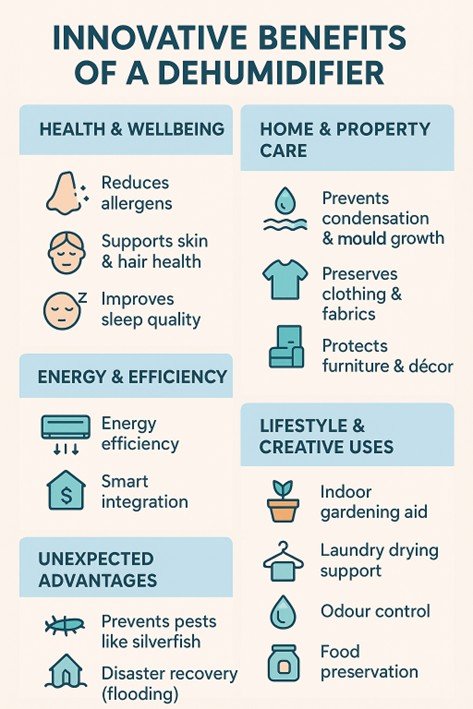
Here are some OTHER benefits of a dehumidifier beyond removing dampness, condensation and mould:
Health & Wellbeing
- Reduces allergens: Lowers dust mites, mould spores, and mildew growth, making the air easier to breathe for asthma and allergy sufferers.
- Supports skin & hair health: Less mould and damp means fewer irritants and less humidity-induced skin issues (like rashes or fungal infections).
- Improves sleep quality: Balanced humidity prevents stuffy air, night sweats, and nasal congestion.
Home & Property Care
- Protects furniture & décor: Prevents wood warping, metal rusting, paint peeling, and wallpaper bubbling.
- Preserves clothing & fabrics: Stops musty odours in wardrobes, shoes, and bedding.
- Extends appliance lifespan: Electronics and musical instruments last longer in controlled humidity.
Energy & Efficiency
- Boosts cooling efficiency: Air conditioners work less hard in drier air, lowering energy bills.
- Smart integration: Many modern dehumidifiers connect to smart home systems and adjust settings automatically.
Lifestyle & Creative Uses
- Indoor gardening aid: Prevents excess moisture that can damage houseplants while keeping air at healthy levels.
- Laundry drying support: Speeds up indoor clothes drying without condensation on walls and windows.
- Odour control: Eliminates that persistent “musty” smell in basements, bathrooms, or kitchens.
- Food preservation: Helps keep dry goods (flour, rice, spices) fresh by reducing moisture in pantries.
Unexpected Advantages
- Noise masking: The white-noise hum can act as a gentle sound buffer in bedrooms.
- Prevents pests: Many insects (like silverfish, cockroaches, and centipedes) thrive in damp conditions—drier air keeps them away.
- Disaster recovery: Essential for drying out spaces after leaks or minor flooding, preventing long-term damage.
